藏品档案
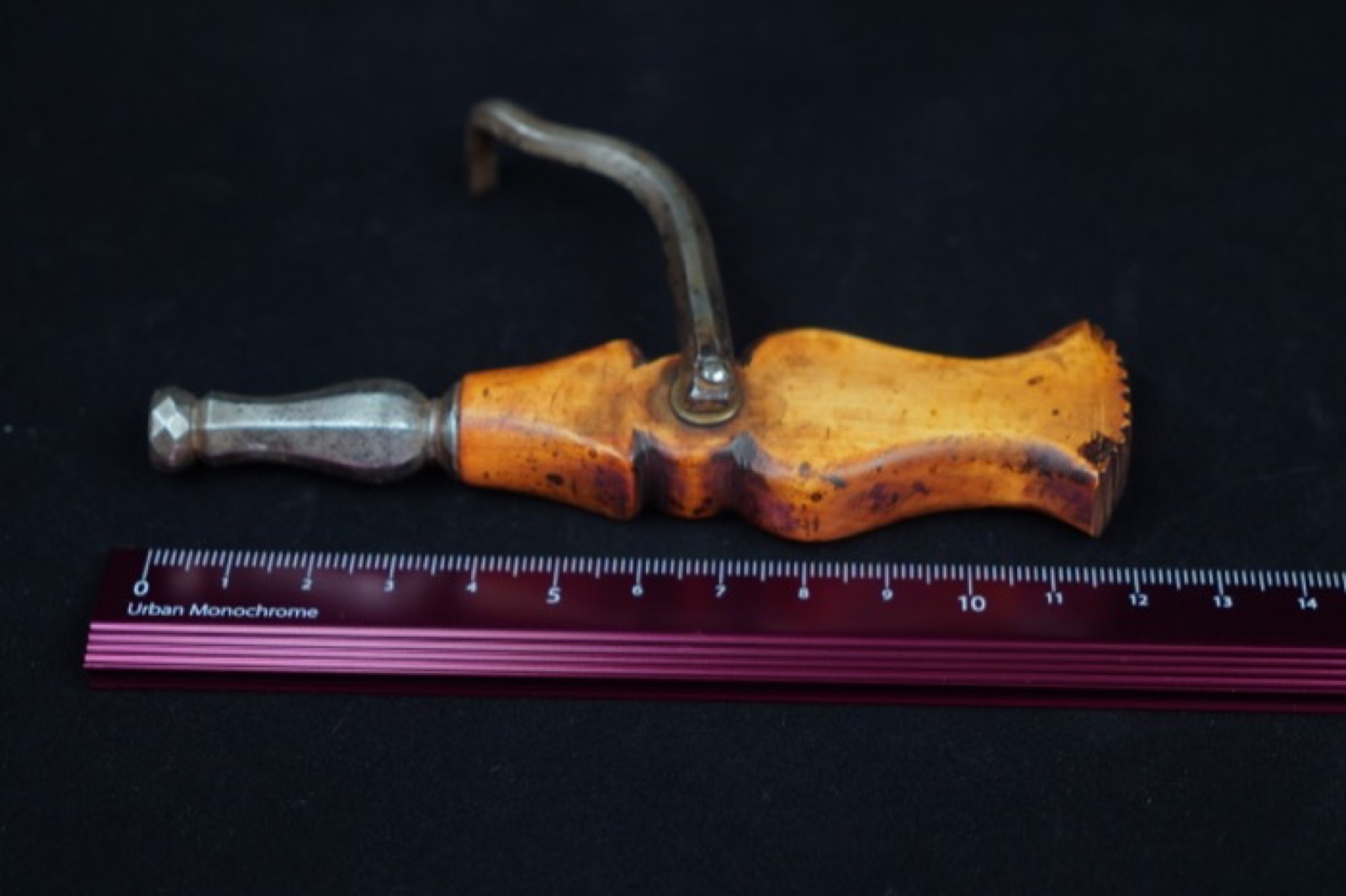
深色硬木长柄牙科鹈鹕
Dental Pelican · 18–19 世纪欧洲 · 牙科鹈鹕特殊制式
▶
语音讲解AUDIO GUIDE · 三语可选
中文
ENGLISH
РУССКИЙ
← 左右滑动选择 · 点击放大查看 →
藏品档案
| 藏品名称 | 深色硬木长柄牙科鹈鹕(Dental pelican / Pelican extractor) |
| 藏品编号 | SA-DM-D-001 |
| 类别 | 历史牙科器械 · 牙科鹈鹕 |
| 年代 | 18–19 世纪 |
| 产地 | 欧洲器械传统(具体国家/制造者待查) |
| 材质 | 深色硬木长柄 + 钢/铁制弯曲杆件与爪钩 |
| 尺寸 | 约 12–14 厘米(照片尺子读数) |
| 完好程度 | 结构基本完整,可见使用磨痕、氧化与旧化 |
| 馆藏来源 | 圣安齿科博物馆旧藏 |
语音讲解稿
中文
ENGLISH
РУССКИЙ
您现在看到的是一件深色硬木长柄牙科鹈鹕
它属于牙科鹈鹕,是一种早期拔牙器械,通过下压杠杆来获得向上的拔出力:手柄很长,柄身是深色硬木并带锯齿状凸缘,便于医生在杠杆施力时握稳;杆件是弯曲的
这是一件十八至十九世纪欧洲的牙科鹈鹕,是早期拔牙器械中较为特殊的制式
牙科鹈鹕与牙科钥匙不同:鹈鹕通过向下按压手柄,利用杠杆原理将牙齿向上撬出,而非旋转施力
在整个拔牙过程中,最危险的不是疼痛,而是下颌脱臼和牙齿碎片掉进气管——所以长柄设计就是给医生留出安全距离
它属于牙科鹈鹕,是一种早期拔牙器械,通过下压杠杆来获得向上的拔出力:手柄很长,柄身是深色硬木并带锯齿状凸缘,便于医生在杠杆施力时握稳;杆件是弯曲的
这是一件十八至十九世纪欧洲的牙科鹈鹕,是早期拔牙器械中较为特殊的制式
牙科鹈鹕与牙科钥匙不同:鹈鹕通过向下按压手柄,利用杠杆原理将牙齿向上撬出,而非旋转施力
在整个拔牙过程中,最危险的不是疼痛,而是下颌脱臼和牙齿碎片掉进气管——所以长柄设计就是给医生留出安全距离
What you are looking at is a dental key with a long dark hardwood handle
It belongs to the dental key family, but differs from the common short-handled, straight-shafted, crescent-clawed type: the handle is very long, made of dark hardwood with a serrated flange along its length to help the dentist grip firmly when applying leverage; the shaft is curved, and the claw is slender and elongated
This is an 18th to 19th-century European dental key, designed as a lever for extracting molars
In the mid to late 18th century, dentists had no modern anesthesia when extracting teeth, and needed an instrument that could generate strong leverage
The claw of this key grips the tooth at the neck, and as the dentist turns the handle, the tooth is levered out of its socket
The most dangerous part of extraction was not the pain, but dislocation of the jaw and tooth fragments falling into the airway — which is why the long-handle design keeps the dentist at a safe distance
It belongs to the dental key family, but differs from the common short-handled, straight-shafted, crescent-clawed type: the handle is very long, made of dark hardwood with a serrated flange along its length to help the dentist grip firmly when applying leverage; the shaft is curved, and the claw is slender and elongated
This is an 18th to 19th-century European dental key, designed as a lever for extracting molars
In the mid to late 18th century, dentists had no modern anesthesia when extracting teeth, and needed an instrument that could generate strong leverage
The claw of this key grips the tooth at the neck, and as the dentist turns the handle, the tooth is levered out of its socket
The most dangerous part of extraction was not the pain, but dislocation of the jaw and tooth fragments falling into the airway — which is why the long-handle design keeps the dentist at a safe distance
Перед вами — зубной пеликан с длинной рукояткой из тёмного твёрдого дерева
Он принадлежит к семейству зубных пеликанов — ранних инструментов для удаления зубов, использующих нажатие на рычаг для создания подъёмной силы: рукоятка очень длинная, из тёмного твёрдого дерева, с зубчатым фланцем для надёжного удержания; стержень изогнутый
Это европейский зубной пеликан XVIII–XIX века, особый вариант среди ранних инструментов для удаления зубов
Зубной пеликан отличается от зубного ключа: вместо вращения, пеликан использует нажатие на рукоятку для извлечения зуба из лунки рычагом
Длинная рукоятка обеспечивает дантисту безопасную дистанцию во время процедуры
Он принадлежит к семейству зубных пеликанов — ранних инструментов для удаления зубов, использующих нажатие на рычаг для создания подъёмной силы: рукоятка очень длинная, из тёмного твёрдого дерева, с зубчатым фланцем для надёжного удержания; стержень изогнутый
Это европейский зубной пеликан XVIII–XIX века, особый вариант среди ранних инструментов для удаления зубов
Зубной пеликан отличается от зубного ключа: вместо вращения, пеликан использует нажатие на рукоятку для извлечения зуба из лунки рычагом
Длинная рукоятка обеспечивает дантисту безопасную дистанцию во время процедуры
鉴定摘要
工艺判断
深色硬木手柄以锯/雕方式成形,柄身带锯齿状凸缘以增强握持摩擦;金属杆件与爪钩以锻造/铸造为主,配以锉磨、凿刻等手工精加工。十八世纪牙科小件器械的金属精密车削尚未普及,金属车削在牙科小件器械中真正普及要到十九世纪中后期。
真伪/类别倾向
形制证据:弯曲杆件与手柄的组合符合牙科鹈鹕的典型特征,鹈鹕式拔牙器械通过下压杠杆来获得向上的拔出力;历史证据:牙科鹈鹕(dental pelican)是18–19世纪欧洲广泛使用的早期拔牙器械之一。